The content below is republished with permission.
A luxury property can be impressive without being a good investment.
A spectacular villa, penthouse, or waterfront residence may have exceptional architecture, expensive finishes, and a prestigious address, yet still offer limited investment value if its price is driven mainly by aesthetics rather than scarcity, demand, and long-term resale potential.
This distinction matters particularly in Dubai luxury real estate, where the premium end of the market attracts international buyers, entrepreneurs, family offices, and high-net-worth individuals seeking both lifestyle assets and wealth-preservation opportunities.
For discerning HNWI investors navigating Dubai’s luxury property sector, the primary evaluation must transcend mere aesthetic appeal. A more strategic question is: What underlying market fundamentals will protect the capital premium I commit today at future divestment?
Frank Vito and EXIOR Investments approach luxury property from precisely this perspective. Ultimately, visual beauty does not preclude a fundamentally compromised investment. The luxury premium only makes investment sense when scarcity, quality, location and future buyer demand provide a credible foundation for the exit.
Luxury Pricing Is Not the Same as Genuine Scarcity
A critical paradigm shift for those engaging with prime real estate Dubai is recognising the profound chasm between an asset that is simply expensive and one that is genuinely scarce.
Price alone does not create scarcity.
A development may contain hundreds of large villas marketed as exclusive, private or limited. If comparable properties continue to enter the market, however, buyers ultimately have alternatives. That can weaken pricing power when an owner decides to sell.
True scarcity is different.
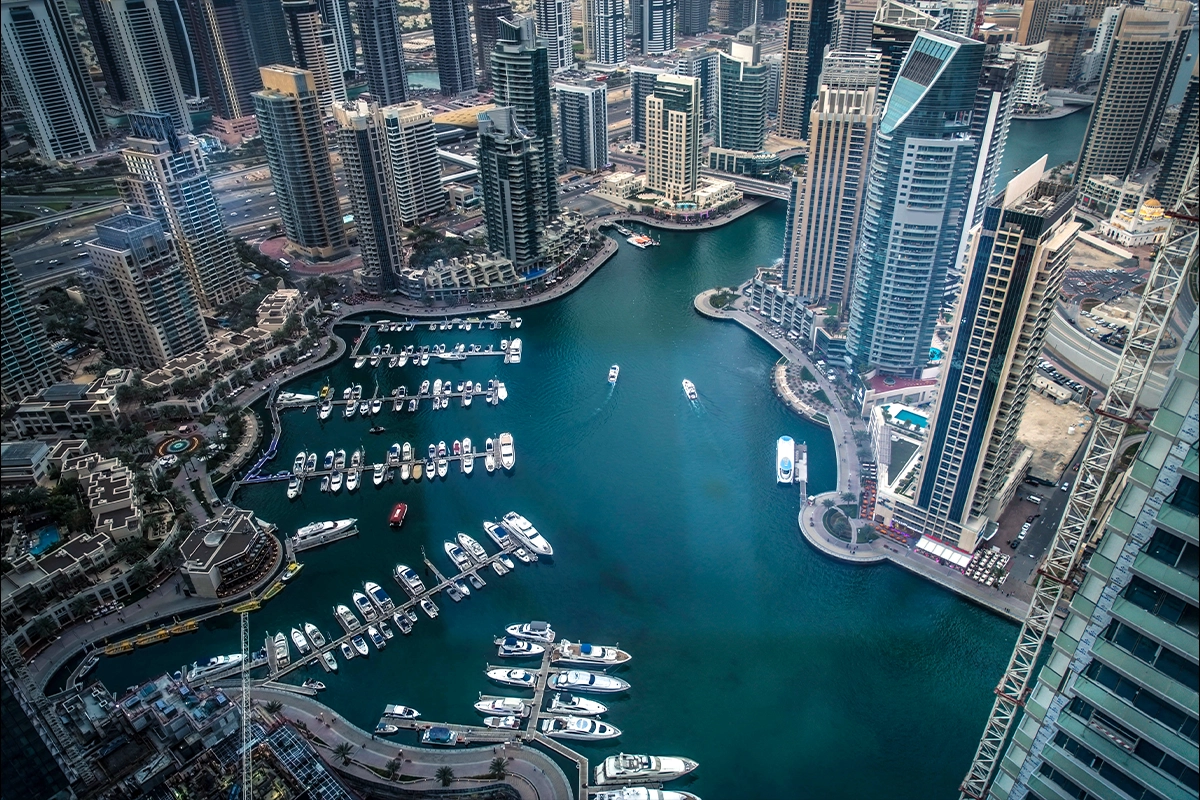
It can arise from factors such as an irreplaceable waterfront position, protected views, unusually large land, limited supply within a specific micro-location, distinctive architectural characteristics or access to amenities that cannot easily be replicated.
For luxury villa investment, this distinction is critical. A villa may command a premium because it is new, beautifully furnished or marketed by a prestigious developer. But if another 50 similar villas can be purchased nearby, the premium may not be as durable as it appears.
The strongest luxury assets tend to combine desirability with constraints on future supply.
That is where Dubai luxury real estate investment becomes less about buying the most impressive property and more about identifying the property whose characteristics are difficult for the market to reproduce.
Location Is More Than a Prestigious Addres
Location remains fundamental to prime real estate in Dubai, but sophisticated investors should look beyond the community name.
Two properties can technically sit within the same area while having very different investment characteristics.
Consider orientation, waterfront access, privacy, road exposure, views, proximity to major destinations and the quality of surrounding development. A property with an unobstructed view, for example, may have considerably stronger long-term positioning than another property in the same project whose outlook could eventually be blocked by new construction.
This is why view protection matters.
For a luxury buyer, the view is part of the asset. For an investor, the question is whether that view will remain valuable in five or ten years.
The same principle applies to infrastructure and surrounding development. New roads, hospitality projects, retail destinations, schools and leisure facilities can strengthen an area’s long-term appeal. Conversely, poorly planned development, construction density or an oversupply of competing luxury residences can affect an asset’s future positioning.
In HNWI property Dubai, micro-location can therefore matter as much as the broader community.
Layout, Service and the Characteristics Buyers Actually Pay For
At the luxury end of the market, buyers are rarely paying simply for square metres.
They are paying for privacy, functionality, convenience, views, outdoor space, entertaining areas, staff accommodation, parking, security, wellness facilities and service.
A well-designed property can therefore outperform a larger but poorly configured alternative.
This is particularly important in luxury villa investment. Large floor area is not automatically an advantage if the layout is inefficient, circulation is awkward, or the property lacks the features its target buyer expects.
Service quality also matters.
Luxury residences increasingly compete not only on physical specifications but on the overall ownership experience. Concierge services, security, hospitality standards, building management and maintenance can influence both rental demand and resale appeal.
For an HNWI property Dubai investor, these factors should be assessed as part of the asset rather than treated as lifestyle extras.
The underlying question is simple: Will the next buyer recognise the same value that I see today?
Liquidity Changes at Higher Price Points
Luxury property is not automatically liquid just because wealthy buyers are in the market.
In fact, liquidity can become more selective as prices rise.
A property priced at a level accessible to a broad group of buyers has a larger potential buyer pool. At the ultra-prime end, the number of financially qualified purchasers may be significantly smaller.
This does not mean expensive property is necessarily difficult to sell. It means that buyer depth becomes increasingly important.
A highly distinctive residence may attract several qualified buyers because it offers something genuinely difficult to find. A merely expensive property may sit on the market because prospective purchasers can find comparable alternatives.
This is one reason Dubai luxury real estate investment requires careful consideration of the eventual exit before acquisition.
An investor should ask:
- Who is the likely buyer at exit?
- How many comparable properties compete for that buyer?
- What makes this asset different?
- Do recent transactions support the price?
- Would an international buyer understand the premium?
- Can the property be repositioned if market conditions change?
These questions help distinguish investment value from marketing value.
Supply Can Make or Break the Premium
Luxury markets are still governed by supply and demand.
A property may look scarce today but become less differentiated if competing developments launch nearby.
For prime real estate Dubai, future supply should therefore be considered alongside existing inventory.
Investors should examine not only what is available for sale today, but what could become available during their intended holding period.
New villas, branded residences, waterfront communities, luxury apartment towers and major master developments can change the competitive landscape. So can infrastructure improvements that make previously less prominent locations more attractive.
This does not mean new development is automatically negative.
In some cases, surrounding investment can increase land values, improve infrastructure and attract a stronger international buyer base. The important consideration is whether future development complements the asset or competes directly with it.
For luxury real estate Dubai, the distinction matters.
A scarce asset surrounded by complementary development may become more desirable. A standardised asset surrounded by increasingly similar inventory may face greater pricing pressure.
Yield Matters — But Yield Alone Is Not the Investment Thesis
Rental yield is an important metric, but it should not be the only metric used to assess luxury villa investment.
Prime residential assets can have different combinations of rental income, capital appreciation potential, operating costs, maintenance requirements and liquidity.
A property producing an attractive headline yield may still be less compelling if it requires substantial capital expenditure or if resale demand is narrow.
Conversely, a lower-yielding property may have stronger long-term investment characteristics if it possesses exceptional scarcity, durable demand and greater resale optionality.
This is where capital preservation becomes important.
The objective should not simply be to maximise paper returns. It should be to understand the relationship between entry price, income, downside risk, capital requirements and exit value.
For an HNWI property Dubai strategy, the investment case should therefore consider both income and the preservation of purchasing power.
Resale Optionality Is a Form of Risk Management
One of the strongest characteristics of a luxury asset is the ability to appeal to more than one type of buyer.
A property that can attract an owner-occupier, international investor, family office or luxury rental operator has potentially greater exit flexibility than an asset designed around a very narrow use case.
This is why resale optionality matters.
An investor does not know exactly what market conditions will look like at exit. Interest rates, supply, buyer preferences, economic conditions and global capital flows can change.
The more credible exit routes an asset has, the more resilient the investment thesis can become.
That principle sits at the heart of disciplined Dubai luxury real estate investment.
The goal is not to predict the future accurately. It is to acquire an asset that remains strategically attractive across multiple possible market conditions.
The EXIOR View: Buy the Asset, Not the Story
Frank Vito’s approach differs from simply identifying the most expensive or visually impressive property.
At EXIOR, the emphasis is on strategic acquisition, risk-adjusted returns, capital preservation, liquidity and exit planning. The firm’s private-capital approach evaluates premium residential opportunities based on factors including scarcity, market liquidity, demand sustainability, and exit visibility.
That leads to a straightforward principle:
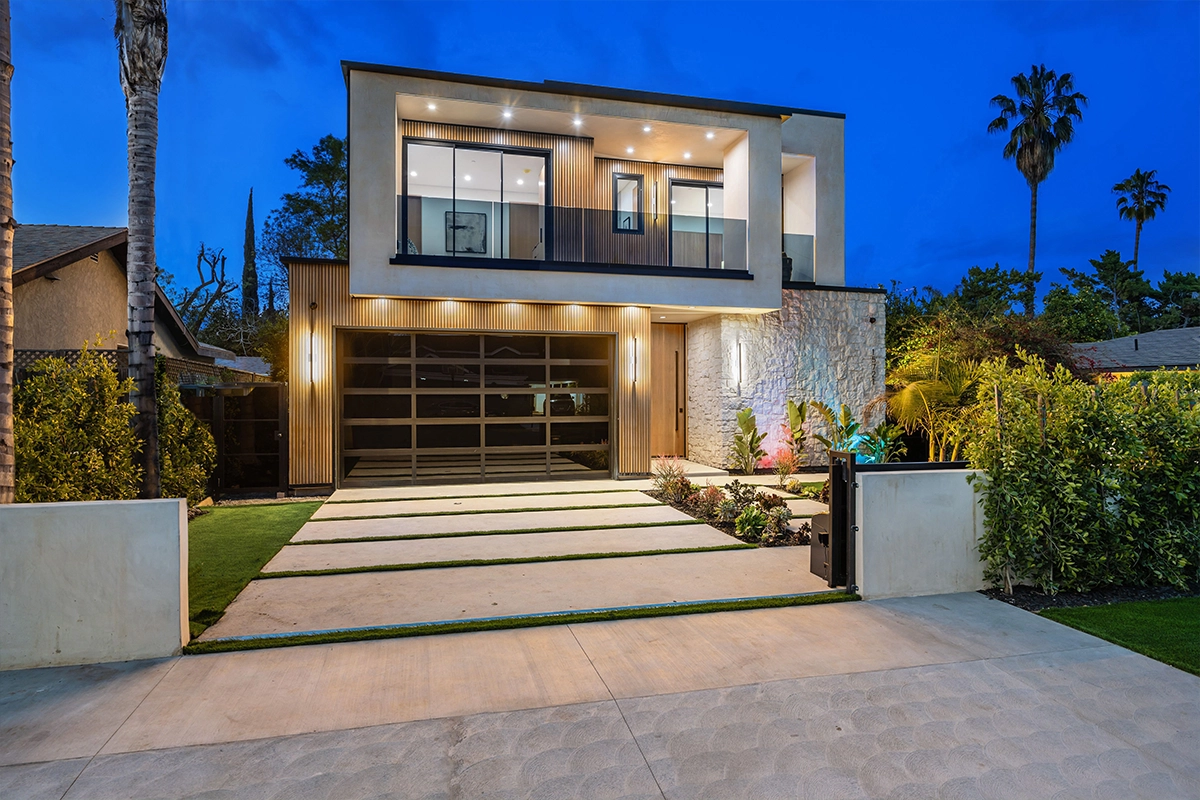
A beautiful property can still mask poor investment potential; premium only makes sense when the asset has characteristics that future buyers will continue to value.
For HNWI investors assessing luxury real estate Dubai, that means looking beyond marble, branding and architectural spectacle. It means understanding what is genuinely scarce, how much competing supply exists, who the future buyer is and whether the asset provides a credible route to liquidity.
This is particularly relevant to HNWI property Dubai, where capital allocation decisions involve considerably more than finding an attractive residence.
The right property should contribute to a broader investment strategy. It should have a defensible position within its market, a clear rationale for its pricing and a realistic path to an eventual exit.
What Should Investors Look for Before Buying?
Before committing capital to a luxury villa investment, investors should evaluate at least five areas:
Is the property’s defining characteristic genuinely difficult to replicate?
Does the micro-location provide enduring access, privacy, views and surrounding quality?
Are there enough financially qualified buyers who could realistically acquire the property?
Could new developments create comparable or superior alternatives?
If market conditions change, are there multiple credible strategies for selling, repositioning or holding the asset?
These considerations create a more disciplined framework for evaluating prime real estate Dubai than simply comparing asking prices.
Luxury Should Be Measured by Investment Quality, Not Price
The most expensive property is not necessarily the most valuable property.
In Dubai luxury real estate, genuine investment quality comes from the combination of scarcity, location, functionality, demand, supply constraints and resale potential.
For sophisticated investors, Dubai luxury real estate investment should therefore begin with a capital-allocation question rather than a lifestyle question: What protects my capital, and what protects my exit?
A premium property earns its premium when future buyers have compelling reasons to want the same asset — and limited alternatives from which to choose.
That is the difference between owning an expensive property and owning a strategically valuable one.
At EXIOR Investments, this distinction forms part of a broader investor-led philosophy: buy well, structure intelligently and exit with discipline.
For HNWIs considering luxury real estate Dubai, the strongest opportunity may not be the property that attracts the most attention today.
It may be the one whose scarcity, positioning and demand will be difficult to replicate tomorrow.
Looking Beyond the Price Tag?
If you are considering a luxury property in Dubai, the most important question is not simply whether the asset is exceptional. It is whether the premium is defensible.
EXIOR Investments works with sophisticated HNWIs to assess premium Dubai real estate through an investor-led framework focused on scarcity, acquisition positioning, liquidity, capital preservation and exit potential.
Rather than starting with a property and building the investment case around it, EXIOR starts with the investor’s objectives, risk parameters and capital strategy — then identifies opportunities that may fit.
If you are evaluating a Dubai luxury real estate investment, seeking prime real estate Dubai, or considering a luxury villa investment, speak directly with EXIOR founder Frank Vito.
Private Capital. Structured Returns. Exclusive Opportunities.
Request Private Access → Speak with EXIOR
Ask Frank Quick (FAQs)